Greenlanders are scheduled to vote on Tuesday in a vote that has garnered minimal external interest in recent years, but which could be critical to the Arctic territory’s future.
The longstanding debate regarding the island’s future relationship with Copenhagen has been further fuelled by US President Donald Trump’s repeated interest in acquiring Greenland, which has cemented its position in the public eye.
“The Arctic has never been the subject of such a prominent spotlight,” asserts Nauja Bianco, a Danish-Greenlandic policy expert.
Denmark, which is located nearly 3,000km (1,860 miles) distant, has governed Greenland for approximately 300 years. While it is responsible for its own domestic affairs, Copenhagen is the location where decisions regarding foreign and defence policy are made.
Presently, five of the six parties on the ballot advocate for Greenland’s independence from Denmark, with the sole exception being the rate at which this should occur.
According to Masaana Egede, editor of the Greenlandic newspaper Sermitsiaq, the debate regarding independence has been “enhanced by Trump.”
The United States president has been attracted to the island’s strategic location and undeveloped mineral resources. The concept of purchasing Greenland was initially proposed by him during his inaugural tenure in 2019.
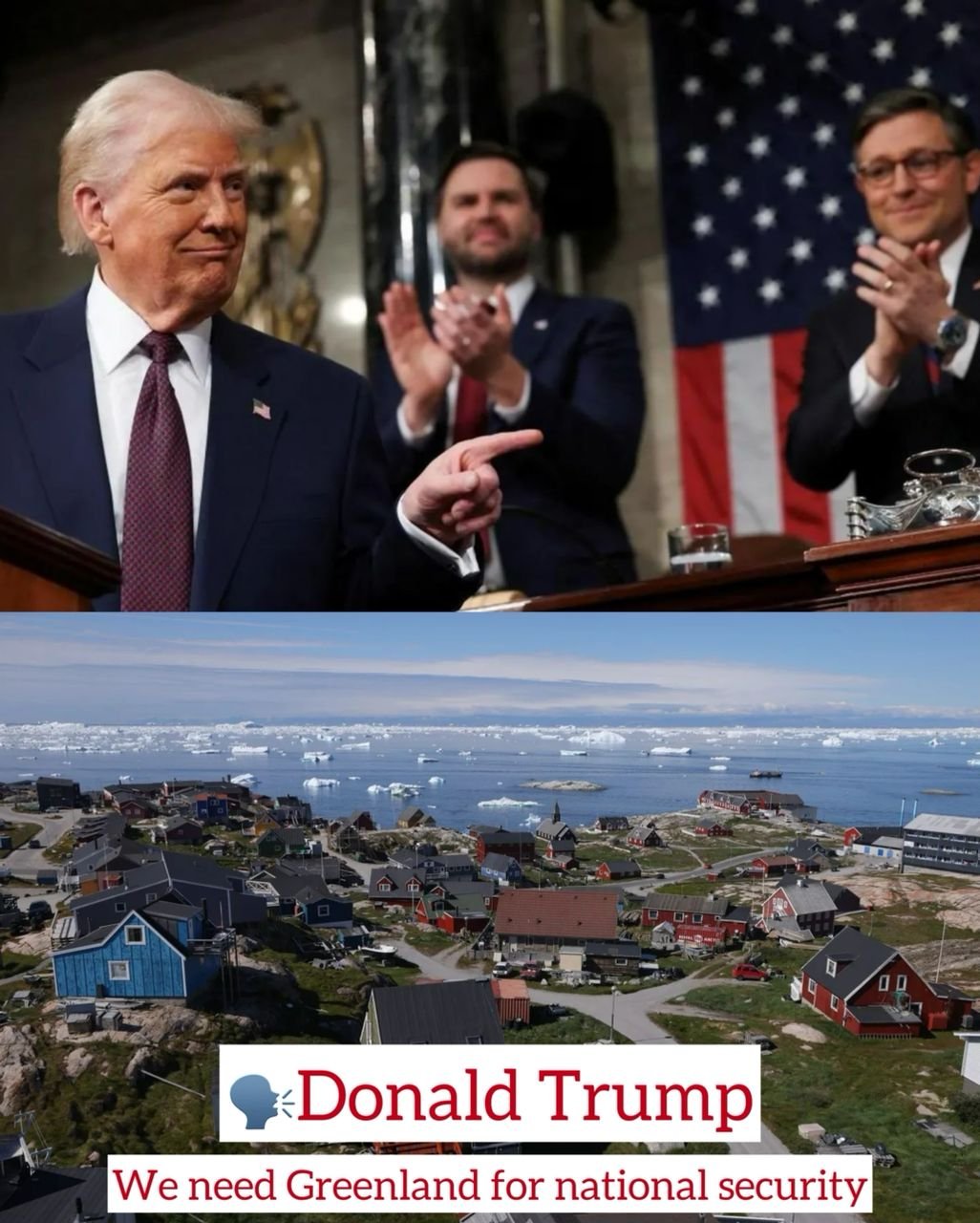
Since his return to office in January, he has renewed his commitment to acquiring the territory. Denmark’s and Greenland’s leaders have consistently rejected his requests.
Last week, Trump reiterated his stance in his address to the United States Congress. “For the sake of national security, we require Greenland.” Several politicians, including Vice-President JD Vance, responded with laughter and acclaim. “We’re going to get it one way or the other,” he declared.
His remarks resonated with politicians in Nuuk, who rapidly condemned them. “We are entitled to be treated with respect, and I am of the opinion that the American president has not been doing so in recent times since he assumed office,” stated Prime Minister Mute Egede.
However, the US interest has fuelled calls for Greenland to secede from Denmark, with the majority of the discussion centred on the timing of the independence process, rather than its likelihood.
However, Nauja Bianco emphasises that Greenland’s independence objective is not novel and has been in the works for decades.
In Greenland, the public’s perception of Denmark has been negatively impacted by a series of disclosures regarding the Danish government’s past mistreatment of Inuit people. The territory should be liberated from “the shackles of colonialism,” as stated by Prime Minister Egede earlier this year.
However, it is the first time that the subject has been the focal point of an election.
Inuit Ataqatigiit (IA), the political party of Prime Minister Mute Egede, advocates for incremental movements towards autonomy. He informed the local media that “citizens must feel secure.”
Egede’s handling of the challenge from Trump and his strong remarks against Denmark regarding past colonial wrongdoings, according to Arctic expert Martin Breum, “will undoubtedly earn him a significant number of votes.”
The potential for smaller competitors to gain traction and disrupt alliances is also a possibility.
The opposition party Naleraq is seeking to initiate divorce proceedings from Copenhagen immediately and establish more direct defence relations with Washington.
Greenland’s party leader, Pele Broberg, has stated that the country may be “out of the Danish kingdom in three years” in reference to the country’s departure from the European Union and Brexit.
Naleraq has made significant progress by capitalising on the discontent with Denmark and fielding the most candidates.
Mr. Breum anticipates that Naleraq will also play a significant role in parliament. He notes that the party’s candidates have performed well on social media and television.
In contrast, the centre-right Demokraatit party maintains that it is premature to advocate for independence.
“The economy must be significantly more robust than it is at present,” stated party candidate Justus Hansen in an interview with Reuters.
Greenland’s economy is heavily reliant on fisheries, and the government’s annual expenditures are contingent upon subsidies from Denmark.
The discussion of Trump and independence has obscured other critical issues for voters, according to newspaper editor Masaana Egede.
“This is an election that should focus on social issues, healthcare, and the care of the elderly.” Almost everything is about independence.
Almost 80% of Greenlanders support the pursuit of future statehood, as indicated by recent polls.
Voting eligibility is estimated at approximately 44,000 individuals; however, the results are challenging to predict due to the limited number of polls and the low turnout.
Even though the majority of Greenlanders are in favour of independence, a survey has revealed that half of them would be less enthusiastic about independence if it resulted in a decrease in their standard of living.
85% of Greenlanders do not desire to become a part of the United States, according to a survey, and nearly half perceive Trump’s interest as a menace.
Leave a Reply