Albion manager Ryan Mason has explained why he took the bold decision to replace Mikey Johnston at half-time during their frustrating 3-2 loss to league leaders Coventry City.
Despite Johnston supplying the two right-flank crosses that allowed Aune Heggebo to score his first-half brace and put the Baggies 2-1 ahead, Mason still opted to withdraw the winger at the break for what he described as “purely tactical reasons.”
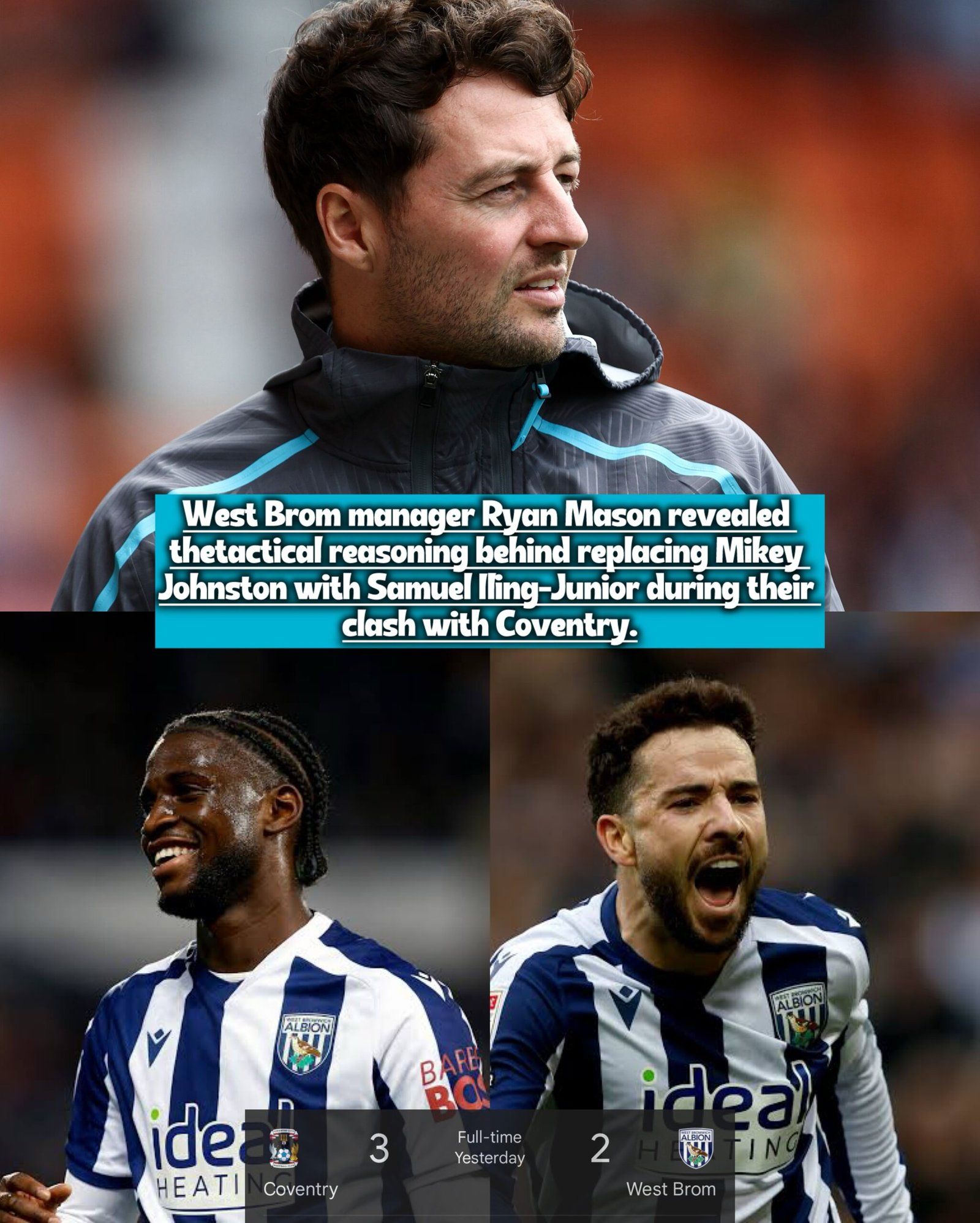
Mason revealed that the selection between Johnston and Samuel Iling-Junior had been extremely close before kick-off, and even though Johnston played a major role in both goals, the coaching staff felt a change in approach was needed for the second half.
Albion, however, completely lost their attacking rhythm after the interval. Reduced to ten men, they failed to register a single shot on target at Carl Rushworth’s goal while Coventry seized momentum and turned the match around.
Mason introduced Toby Collyer and Ousmane Diakite shortly after Coventry moved 3-2 in front — changes he had intended to make before Victor Torp struck the decisive goal — as Karlan Grant was pushed up front with Collyer and Isaac Price providing support. Even with the reshuffle, West Brom could not meaningfully threaten the hosts.
The manager also addressed his decision not to remove Jayson Molumby at half-time despite the midfielder being on a yellow card. Molumby, starting his first match in seven outings, had been booked for a forceful challenge near Coventry’s corner flag during a heated spell of play. Mason admitted he didn’t want to take ownership away from the Ireland international — but the risk backfired as Molumby was sent off less than four minutes into the second half for tugging an opponent’s shirt near the halfway line.
Explaining his thinking behind the change on the wing, Mason said the staff felt the team would benefit from a natural left-footer in that area for the second period. The plan was to adjust their shape, exploit deeper spaces and try to trouble Coventry in zones they felt could be attacked more effectively — but the red card and Coventry’s momentum swung the contest out of Albion’s control.
Leave a Reply