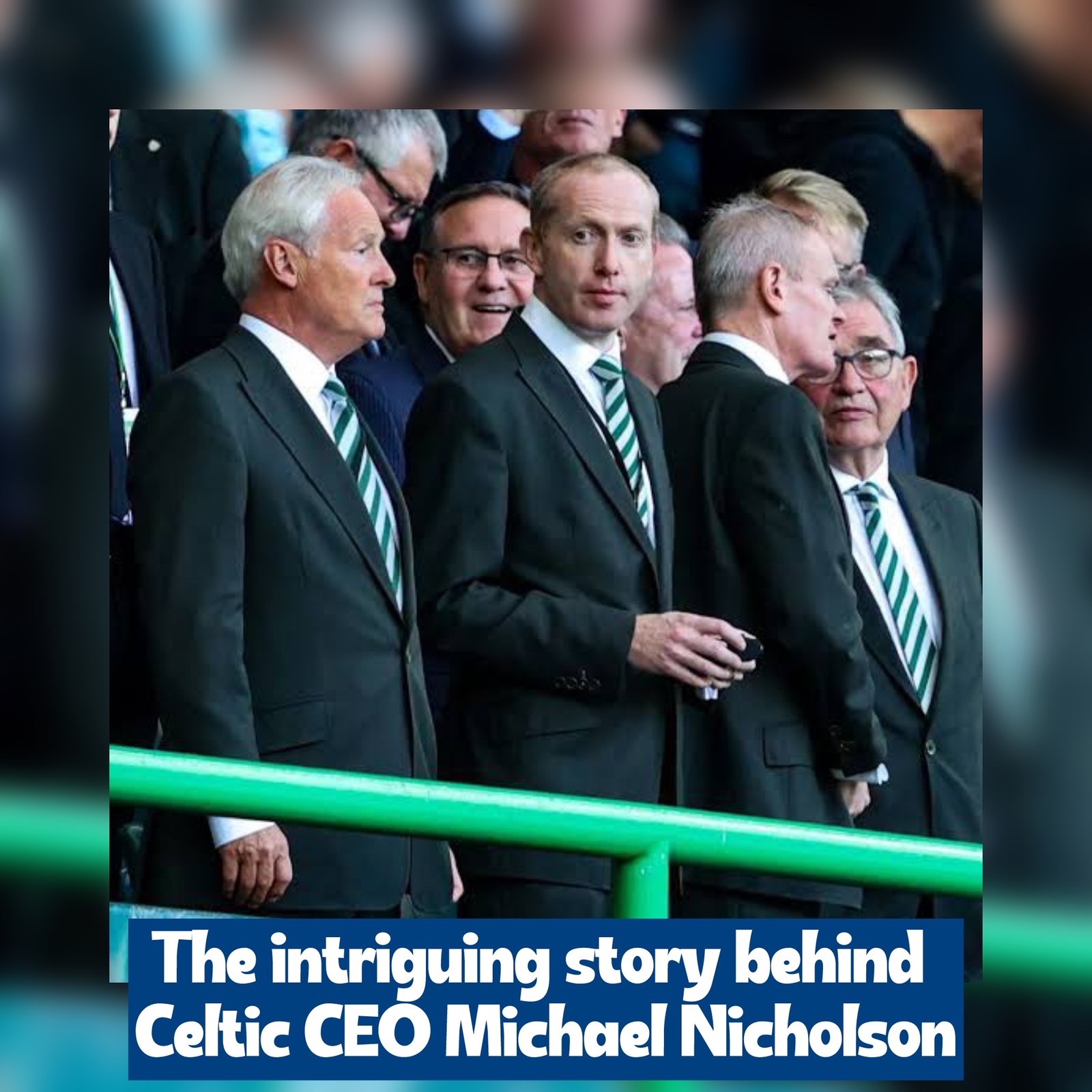
The curious case of Celtic CEO Michael Nicholson
Celtic supporters have long been accustomed to the club maintaining strict control over how it communicates with the public.
At Celtic Park, nothing is left to chance. Interviews, media appearances and official statements are carefully managed and tightly structured. Questions are often filtered, conversations are pre-recorded, and the club rarely places its senior figures in situations where they might face unscripted questioning from outside sources. It is a communication strategy that is disciplined, controlled and deliberate — the kind of approach that even the most image-conscious organisations might admire.
Yet in recent weeks, something unusual has stood out.
As interim chairman Brian Wilson has conducted interviews and held discussions with supporters, the absence of Michael Nicholson has become increasingly difficult to ignore.
Since taking over as chief executive in 2021, Nicholson has been responsible for overseeing the day-to-day operations of Celtic F.C.. Traditionally, when major issues arise that involve the club, its supporters, or matters affecting the wider game, the chief executive is expected to be the individual explaining the club’s stance and leading the public response.
But that has not been the case recently.
Following the attack on Celtic supporters and staff during the heated encounter with Rangers F.C. at Ibrox Stadium, many expected Nicholson to step forward and outline the club’s position. Instead, Wilson has emerged as the public voice of the Celtic boardroom during what has been a particularly turbulent period.
Wilson stepped into the interim chairman role after the departure of Peter Lawwell, and it is entirely reasonable for a chairman to represent the club in certain circumstances. Chairpersons often address matters relating to governance, long-term strategy, or the broader direction of the organisation.
However, the topics Wilson has been addressing recently appear to fall more naturally within the responsibilities of the chief executive.
He has been the one meeting with supporter groups.
He has been the figure attempting to ease tensions between the club and sections of the fanbase.
And now he has taken on the role of publicly addressing the disorder that followed Celtic’s dramatic victory over Rangers in the Scottish Cup quarter-final.
The scenes after that match — where clashes occurred following Celtic’s penalty shoot-out win — raised serious questions about safety, supporter behaviour, and the treatment of fans at one of Scottish football’s most high-profile fixtures.
Wilson’s response came through a carefully managed, pre-recorded discussion with Celtic TV presenter Gerry McCulloch. The tone of the message itself was calm and measured, but one aspect stood out to many observers: Nicholson was nowhere to be seen.
At Celtic, communication decisions are rarely accidental. Every detail — including who speaks publicly on behalf of the club — tends to be deliberate. That is why the current situation has left many supporters puzzled.
The last time Nicholson publicly addressed supporters through the club’s official channels was on 17 December 2025, when he appeared on Celtic’s YouTube platform to express his support for the now ill-fated project involving Wilfried Nancy shortly after the club lost the League Cup final.
Since then, his public profile has been almost non-existent.
In the meantime, Nicholson has faced increasing scrutiny from sections of the support. Many believe the club’s disappointing season — and wider issues with the club’s direction over the past three years — stem partly from decisions made at executive level.
Previously, Nicholson had attended meetings with supporter representatives, including discussions with the Celtic Collective and other fan groups. However, when another meeting between the club and supporters took place on 17 February, the CEO was not present.
For fans watching from the outside, the question is simple.
Why has the chief executive of Celtic not been leading the conversation during one of the most sensitive weeks the club has faced this season?
One possible explanation is that Nicholson could be preparing to leave his position this summer. If that is the case, his absence from the spotlight might begin to make sense. If he is not planning to step down, however, the current communication strategy becomes far more difficult to justify.
Either way, supporters have noticed the silence.
And at a club like Celtic, silence is rarely meaningless.
Leave a Reply