Derek McInnes made a pointed comment about Celtic’s coaching staff after the draw at Tynecastle — and the detail that stood out most was who he deliberately left out.
He stressed that his frustration was not directed at Martin O’Neill or Shaun Maloney, but at what he labelled an “inexperienced” member of the Celtic coaching team.
That distinction is important because it narrows the target and naturally sparks curiosity over who he meant. The incident followed Benjamin Nygren’s opener, when emotions spilled over on the touchline. In a match already filled with tension, late twists, VAR involvement and another red card, the atmosphere was charged throughout. At Tynecastle, even minor moments were always going to be magnified
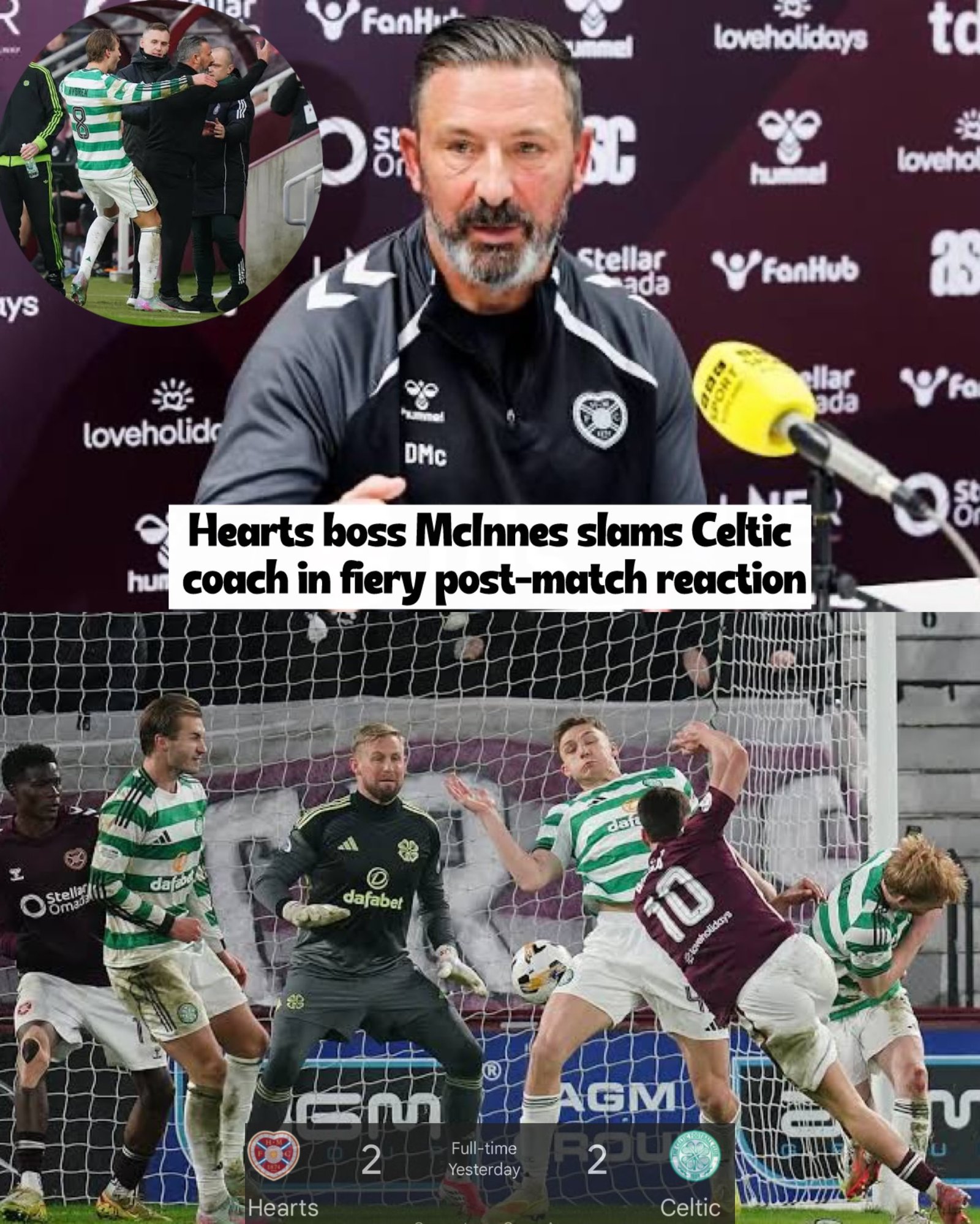
Rather than brushing it off, McInnes chose to address it publicly. That decision adds significance, especially given the context of a game where Hearts were trying to protect their position and Celtic were pushing to close the gap. Comments like that rarely come without intention, particularly from a manager so familiar with the Scottish football landscape.
By naming O’Neill and Maloney as not being part of the issue, McInnes effectively pointed the finger elsewhere.
That leaves figures like Mark Fotheringham or Stephen McManus as the most likely subjects, considering their roles on the bench. If so, the criticism feels questionable when you look at what both bring to the club and Celtic’s current situation.
McManus, for one, has deep roots at Celtic — first as a captain, now as a coach guiding younger players into senior football. His work centres on standards, mentality, and preparing players for high-pressure situations just like this one. Describing him as “inexperienced” does not really align with that background.
Fotheringham’s career path has taken a different route but has been equally demanding. He has coached overseas, managed at Championship level, and operated in intense environments where scrutiny is constant. Painting him as a novice overlooks the breadth of experience that led to Celtic bringing him in.
The reaction from Celtic’s bench also needs to be judged in context. This was not a straightforward afternoon where goals came easily. In a tight, high-stakes game, an emotional response to scoring is hardly unusual.
Touchline conduct often becomes a talking point when it suits a narrative. It can shift focus away from on-field issues or serve as a post-match talking point after a heated contest. McInnes understands that dynamic as well as anyone, given his years in the Scottish game.
Ultimately, the match itself should be the main story. Hearts once again conceded late from a set-piece scenario that Celtic punished, and the bench reaction followed a goal that changed the momentum. That moment didn’t determine the outcome — the defending, officiating calls, and key moments in both penalty areas did.
McInnes said: “Just one of their inexperienced coaches, I didn’t like his reaction to scoring the goal, but nothing to do with Shaun or Martin, just a poor reaction.”
From Celtic’s perspective, the remark is unlikely to cause much internal concern. O’Neill has publicly supported his staff, and the players’ focus remains on collective performance rather than outside noise.
What matters most will be results, development, and how the team handles pressure — not sideline exchanges.
If the intention was to distract, it seems unlikely to have much impact. Celtic’s coaching staff will ultimately be judged on the team’s displays, progress, and resilience in games like this. In that regard, both Fotheringham and McManus have already shown they are well suited to their roles.
Leave a Reply